


 Meetups
 Videos
 Podcasts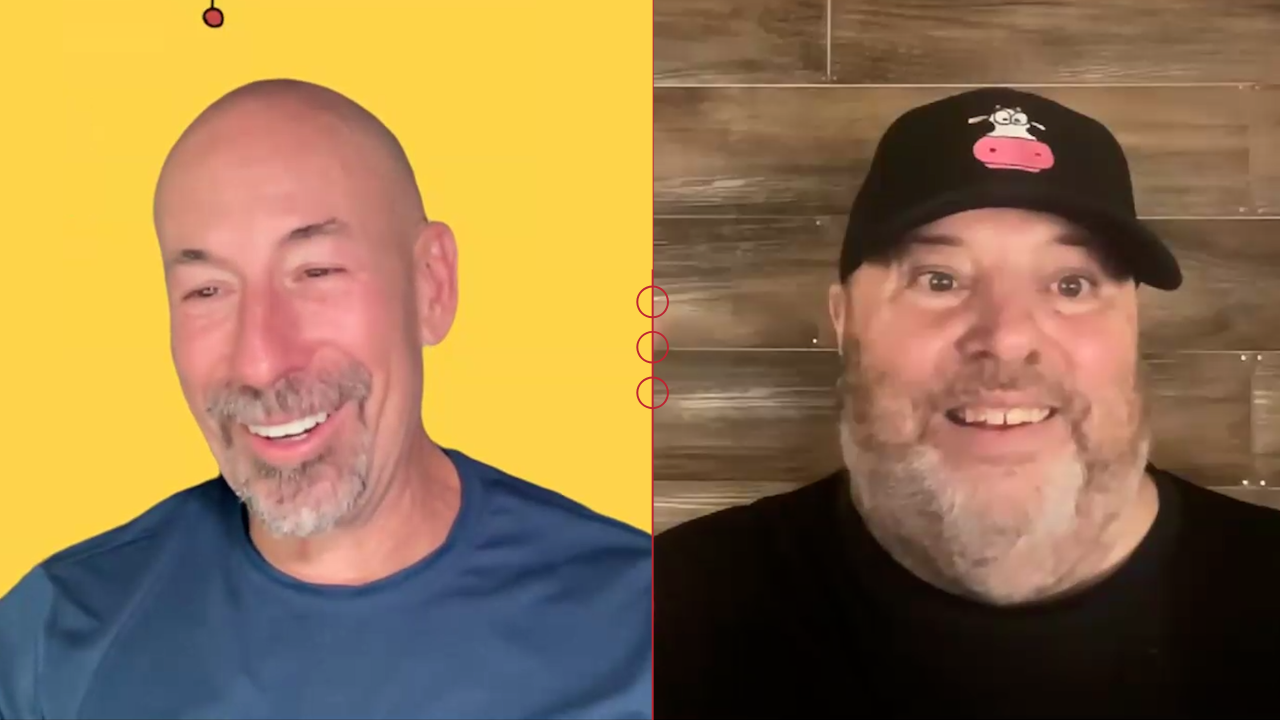
Share


Subscribe


Episode #482
Unique Ability Marketing: How to Stand Out Amid the Noise with Joe Polish and Dean Jackson
Joe Polish and Dean Jackson answer a question live from Chris at Clearfield Leadership: How do you use Dan Sullivan’s unique ability concept to make your marketing stand out amid the noise?
Joe breaks down what unique ability actually is, Dean ties it to his capability and cap gap framework, and the conversation moves into the E.L.F. vs. H.A.L.F. exercise, why pain is the greatest teacher every business has, and why the future of marketing depends on staying stubbornly human in the age of AI.
Here’s what you’re about to discover in this conversation:
- Why Joe says Entrepreneurs give away their unique ability for free while charging full price for the stuff that’s actually hard for them.
- Dan Sullivan’s four levels of ability, incompetence, competence, excellence, and one more, and why excellent is not the level you want to build a business on.
- Why Joe calls himself “a multiplier, not a simplifier” and Dean the opposite, and what that reveals about how each of them should market.
- Dean’s cap gap framework and the $4 million a year one hotel loses on a single restaurant, and why naming your gap as a loss is what moves you to act.
- The E.L.F. vs. H.A.L.F. exercise Joe uses on a single sheet of paper to sort every activity, person, and marketing initiative in his business.
- Why Joe says pain is a messenger.
If you’d like to join world-renowned Entrepreneurs at the next Genius Network Event or want to learn more about Genius Network, go to www.GeniusNetworkEvents.com.
Chris’s Question: Where Unique Ability Meets Marketing
- Chris from Clearfield Leadership submits a question during an I Love Marketing Live Q&A: how do you use Dan Sullivan’s unique ability concept to make your marketing stand out amid the noise?
- Joe reveals he and Dan Sullivan have discussed unique ability so much that the two are considering writing a book together on the concept.
Dan Sullivan’s Four Levels of Ability
- Dan Sullivan’s framework breaks every activity into four levels: incompetence, competence, excellence, and unique ability.
- Excellence can still drain you. Joe’s example is public speaking: you can be excellent at it and still find it hard and exhausting.
- Unique ability feels different. It gives you never ending energy, you’re skilled at it without feeling like you’re working, and it energizes rather than drains you.
- Dan Sullivan has noticed people often place no value on their unique ability because it doesn’t feel like hard work, so they give it away for free and charge instead for the stuff that looks difficult.
Joe’s Unique Ability: Connection Through Interviews
- Joe defines his own unique ability as connection through interviews: curating discussions with high level people and generating endless amounts of ideas.
- He calls himself “a multiplier, not a simplifier,” in contrast to Dean, who Joe says is one of the best marketing minds in the world because he’s a simplifier.
- Every company Joe has built, Genius Network, Genius Recovery, and Ghost Town Cleator Arizona, and every book he’s written trace back to the same theme: connection, built on the belief that the opposite of addiction is connection.
Dean’s Framework: Capability, Capacity, and the Cap Gap
- Dean builds on Joe’s answer with his own model: capability is what you’re able to do, capacity is how much of it you can take on, and the gap between the two is what he calls the cap gap.
- The bridge across that gap is your ability, whatever it takes to reach the people you’re actually able to help.
- If someone has an outstanding capability to create a result but doesn’t have the reach to find the right people, and has the capacity to serve twice as many clients as they currently do, that gap is exactly where unique ability and business strategy meet.
- Your unique ability as an entrepreneur becomes your business’s unique ability once it’s tied to a clear signature result people can see themselves in.
Congruency: Marketing Something You’re Actually Connected To
- Joe argues you can’t be a great marketer, or enjoy marketing, if you’re disconnected from what you’re selling or how you’re selling it.
- Part of congruency is choosing to market only what you feel genuinely aligned with, so you naturally attract people who are aligned with you.
- Joe points out that the best description of the Genius Network Annual Event is really just a restatement of his own unique ability: bringing people together, doing interviews, making connections, with some healing and service built in.
Unique Ability Becomes the Offer
- Joe’s direct answer to Chris: unique ability becomes the offer, and unique ability becomes the marketing. The more clarified you are on it, the more attractive you become.
- Dean Jackson is Joe’s example: Dean’s unique ability is simplifying, and the nine word email he invented is that unique ability expressed as marketing.
- Joe’s advice for anyone chasing simplicity in their own marketing: study what Dean Jackson does.
The E.L.F. vs. H.A.L.F. Exercise
- Joe hands Chris, and everyone listening, a simple diagnostic: draw a line down a piece of paper, label one side Easy, Lucrative, and Fun (E.L.F.), and the other side Hard, Annoying, Lame, and Frustrating (H.A.L.F.).
- List every activity, person, project, and marketing initiative currently in your business, and sort each one onto the E.L.F or H.A.L.F. side.
- Whatever falls inside your unique ability lands on the E.L.F side. It may not be lucrative yet, but it feels liberating rather than like grunt work.
- E.L.F is a result, not a starting point. Setting up an E.L.F business can be genuinely hard at first, and it doesn’t arrive right out of the gate.
When Your Life Is the Furthest Thing From E.L.F.
- Joe gets candid about what’s currently hard in his own life: nonstop tinnitus and 70 percent hearing loss in his left ear since March 15, a possible fracture in a transverse process in his low back, and a knee injury.
- He frames these physical struggles as a metaphor for the stress that shows up in business, something to navigate rather than eliminate.
- If your activities and the people around you are constantly hard, annoying, lame, and frustrating, Joe says that’s life’s way of telling you to make a change.
Pain as a Messenger and a Teacher
- Joe references the first chapter of his book, What’s In It For Them, pain is a messenger, and describes how life creates pain until he pays attention to what’s off track.
- Pain shows up no matter how well you plan. The real skill is learning to transcend it, navigate it, or accept it.
- The same pain that shows up in your life is what your prospects and clients are carrying too. Joe credits Richard Rossi with the line: wherever there’s anxiety, there’s opportunity.
Naming the Cap Gap as a Loss
- Dean connects pain back to his cap gap framework: recognizing your cap gap and framing it as a loss, not just a missed opportunity, is what moves people to actually act.
- His example: Gamal Aziz’s hotel is losing an estimated $4 million a year because of one underperforming restaurant. Framed as a loss instead of an opportunity, that number demands action.
- Dean references Joe Rogan’s point about ancestors and anxiety medication: humans are wired to treat pain and threat as urgent, because the ones who weren’t wired that way didn’t survive to pass it on.
Finding Your Own Pains to Remove
- Joe encourages listeners to become pain detectives in their own markets: find where people are hurting and build a business around removing it.
- He points to an attendee on the call as a real time example, noting that her business, if she really thought about it, is about finding the pains people have and helping remove them.
- He’s careful to note this isn’t about minimizing anyone’s suffering. Some people are in pain severe enough that they can’t function, and removing your own pain and suffering first makes you more capable as an Entrepreneur.
Bringing Back I Love Marketing Chapters
- Joe and Dean talk about relaunching I Love Marketing chapters and meetup groups worldwide, something that existed in the early days of the show.
- Back in 2011 through 2013, more than 100 people met in person every single day around the world just to talk about what gets covered on I Love Marketing.
- During the live recording, the idea plays out in real time: Bantu volunteers to lead a South Africa chapter, Ramon immediately says he’d love to start a group in South Africa too, and the two are introduced to each other on the spot.
Staying Human in the Age of AI
- Joe’s closing message: in a world moving toward AI, stay connected to real humans, go out and meet people, and handwrite cards instead of letting your brain get lazy.

*******************************
To go deeper on the insights from I Love Marketing, access your FREE COPY of the BREAKTHROUGH REPORT, 8 Profit Activators to help you create more leads, convert more sales, and stimulate more referrals. CLICK HERE TO GET THE REPORT
*******************************
Note: The above links are affiliate links where we will receive a small commission if you then purchase the item. That is one way we can optimize this site and continue providing valuable free content.